Latest GST Update: E-Way Bill Closure Facility & Mandatory Ship-To GSTIN
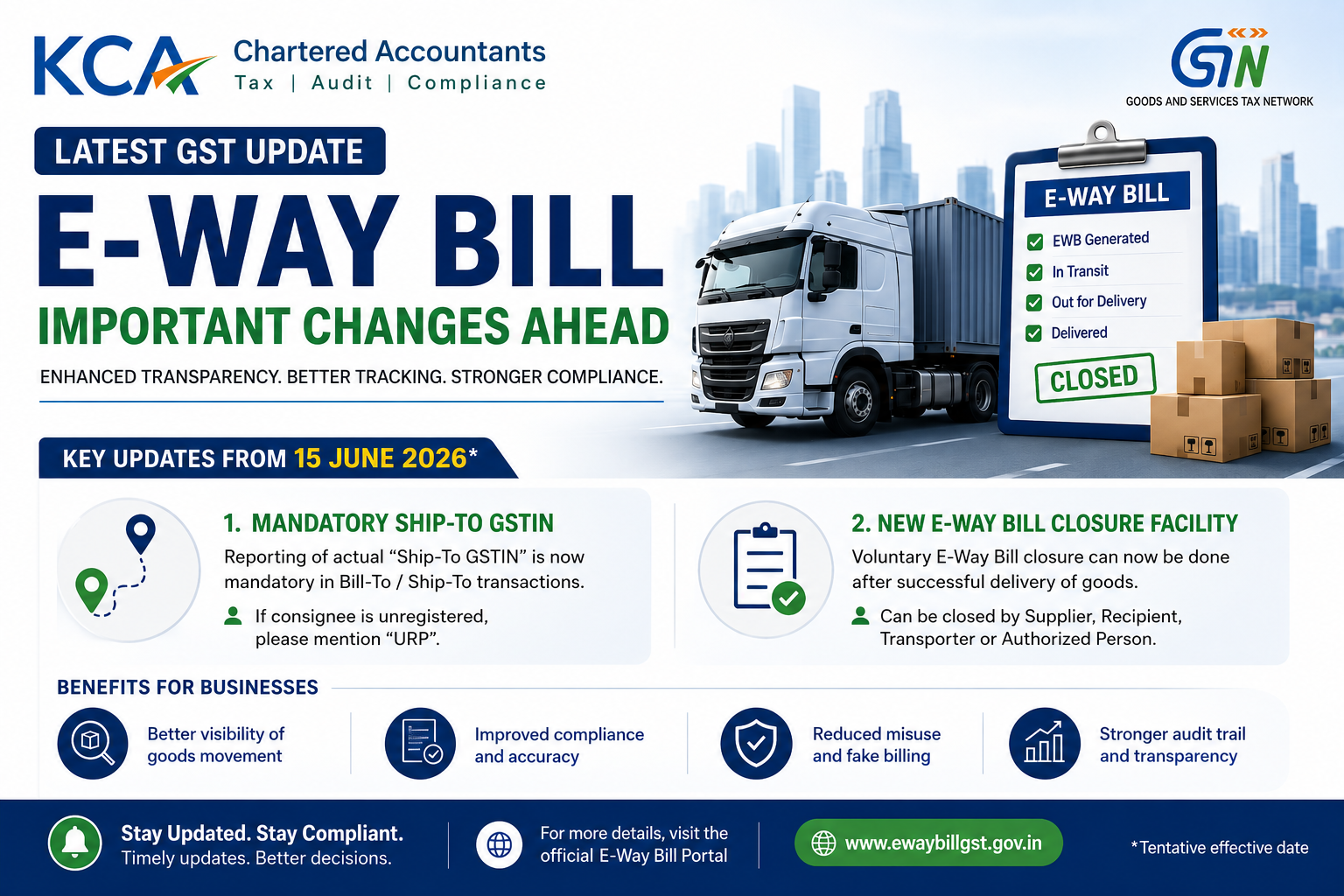
The GSTN has introduced major enhancements in the E-Way Bill (EWB) portal to improve goods traceability, data accuracy, and GST compliance. These new updates are expected to become operational from 15 June 2026.
The two major changes are:
- Mandatory “Ship-To GSTIN” reporting
- New voluntary E-Way Bill Closure facility
1. Mandatory “Ship-To GSTIN” in Bill-To / Ship-To Transactions
GSTN has made it mandatory to capture the actual “Ship-To GSTIN” while generating E-Way Bills in Bill-To / Ship-To transactions.
What is a Bill-To / Ship-To Transaction?
In many businesses:
- Invoice is raised to one party (“Bill-To”)
- Goods are delivered to another party/location (“Ship-To”)
Example:
- Head office places order
- Goods directly delivered to branch or customer warehouse
Previously, taxpayers often mentioned only the billing GSTIN and shipping address. Now, GSTN wants the actual consignee GSTIN to be reported.
New Rule
Mandatory Field:
✅ “Ship-To GSTIN”
If consignee is unregistered:
✅ Enter “URP” (Unregistered Person)
Purpose of This Update
GSTN introduced this change to:
- Improve movement tracking
- Reduce fake billing
- Enhance reconciliation
- Increase invoice traceability
- Strengthen GST data integrity
Impact on Businesses
Businesses may need:
- ERP software updates
- API modifications
- Changes in invoicing workflow
- Staff training for EWB generation
Incorrect Ship-To details may create:
- EWB rejection
- GST mismatch notices
- Audit complications
2. New E-Way Bill Closure Facility
GSTN has also introduced a new “E-Way Bill Closure” functionality on a voluntary basis.
What is EWB Closure?
After successful delivery of goods, taxpayers can now voluntarily close the E-Way Bill in the portal.
This acts as a confirmation that:
✅ Goods reached destination
✅ Transportation process completed
✅ EWB lifecycle ended
Who Can Close EWB?
The closure can be done by:
- Supplier
- Recipient
- Transporter
- Authorized logistics person
Benefits of EWB Closure
Advantages:
- Better shipment tracking
- Reduced misuse of active EWBs
- Improved compliance monitoring
- Cleaner transporter records
- Better audit trail
Important Points
- Closure facility is currently voluntary
- It does not replace EWB validity rules
- Businesses should maintain delivery proof before closure
Effective Date
The proposed rollout is expected from:
📅 15 June 2026
Official Advisory
GSTN advisory dated 20 May 2026 explains these enhancements in detail.
Official Portal:
Advisory PDF:
GSTN Advisory on EWB Enhancements
Conclusion
The new E-Way Bill updates mark a significant shift toward system-driven GST compliance. Mandatory Ship-To GSTIN reporting will improve transparency in goods movement, while the EWB Closure facility will help track the complete delivery lifecycle.
Businesses should update their ERP systems, train GST teams, and review E-Way Bill processes before the implementation date to avoid operational disruptions and compliance issues